Source High Precision FDM 3D Printer for Prototyping, Manufacturing, and Education
Source high precision FDM 3D printer models from 30 available listings. Compare specifications such as build volume, nozzle options, and connectivity to find the right industrial desktop solution for your prototyping, manufacturing, or educational needs; compare the available evidence and request quotations based on your requirements.
Key considerations
Products List
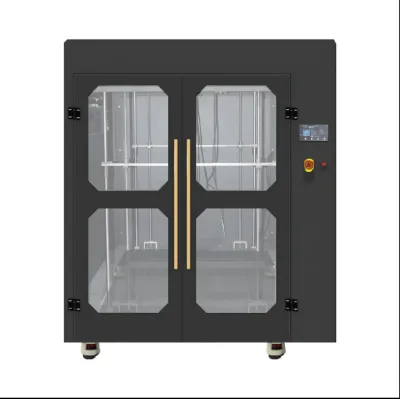


$50000.00 - $150000.00
Moq: 1


Comprehensive Sourcing Guide
High Precision FDM 3D Printer Sourcing Guide
Procuring high precision FDM 3D printers requires distinguishing between general desktop models and specialized industrial units capable of sub-millimeter accuracy. The observed market data indicates a wide spectrum of capabilities, ranging from standard 1.75 mm filament systems to advanced configurations supporting multiple diameters like 2.85 mm and 3.0 mm. Buyers must carefully evaluate whether the specific application demands the 0.05mm X/Y resolution found in certain high-end units or if standard 0.1mm precision suffices for general prototyping.
The technical landscape includes diverse operating systems such as Linux, MacOS, and Windows, alongside connectivity options like USB, Wi-Fi, and wired connections. While some units feature dual nozzles for complex multi-material workflows, others utilize single nozzles optimized for specific filament types like ABS, PLA, TPU, or PETG. Understanding these hardware variations is critical, as the choice between a 350mw or 450mw power input directly impacts the machine's ability to maintain thermal stability during extended high-precision print cycles.
Product Scope and Observed Listing Signals
The current market listings reveal a significant variance in build volumes, with some units offering a 1000x1000x1000mm build envelope while others are compact desktop models measuring approximately 545x575x645mm. This disparity necessitates a clear definition of the required print size before engaging with suppliers, as the physical footprint and power requirements differ substantially between large-format industrial machines and smaller desktop variants. Buyers should verify the exact dimensions against their available workspace to ensure compatibility with existing facility layouts.
Listing signals also highlight differences in user interface and control systems, ranging from 3.5-inch to 4.3-inch full-color touch screens that support multiple languages including English and Chinese. The presence of specific model identifiers like T220D Pro or T300D Pro suggests distinct feature sets that may influence the decision-making process. It is essential to correlate these model numbers with the actual hardware specifications provided, such as net weight and power input, to avoid confusion between similar-looking but functionally different product lines.
Technical Specifications to Verify
Precision is the defining characteristic of this category, yet the observed data shows conflicting resolution claims ranging from 0.025mm minimum layer thickness to 0.1mm standard precision. Buyers must explicitly request and verify the specific X/Y and Z-axis resolution for the exact unit being purchased, as these metrics directly determine the surface finish and dimensional accuracy of the final part. Relying on general category descriptions without confirming the specific model's capabilities can lead to significant discrepancies in production quality.
Material compatibility and nozzle configurations are equally critical technical factors that require rigorous verification. While the market supports a broad range of filaments including ABS, PLA, TPU, and PETG, the specific hot bed material and nozzle diameter (0.2mm vs 0.4mm) dictate the suitability for different applications. Additionally, the molding technology, typically FDM, must be confirmed alongside the filament diameter options to ensure the printer can handle the specific material properties required for the intended industrial or prototyping tasks.
Compliance and Safety Documentation
Safety compliance for high-voltage equipment operating at 220V or 100-120VAC requires thorough documentation review before deployment. Buyers should insist on seeing electrical safety certifications that verify the power input systems meet the standards of the destination country, particularly regarding the 360W or 60W power consumption ratings observed in different models. Without proper certification, the risk of electrical failure or fire increases, especially in environments where these printers may operate continuously for long durations.
While specific certification statuses like REACH are noted in background data, they should not be assumed for every listed product without explicit confirmation from the supplier. Procurement teams must request current test reports and safety data sheets that specifically address the thermal management of the hot bed and the electrical integrity of the control systems. Ensuring that the documentation matches the specific model number and voltage rating is a non-negotiable step in mitigating liability and ensuring operational safety.
Cost Drivers and Commercial Terms
The price range for these machines is extensive, spanning from $100 to $150,000, driven primarily by build volume, precision capabilities, and the complexity of the control systems. Higher costs are often associated with larger build envelopes, dual-nozzle configurations, and advanced touch interfaces, whereas lower-priced units typically offer standard precision and single-nozzle setups. Buyers must align their budget with the specific performance requirements to avoid overspending on unnecessary features or under-investing in critical precision capabilities.
Commercial terms such as Minimum Order Quantity (MOQ) and warranty coverage also significantly influence the total cost of ownership. The observed MOQ range of 1 to 10 units suggests flexibility for small businesses, but bulk purchasing may unlock different pricing tiers. Furthermore, the standard one-year warranty provided by many suppliers should be scrutinized for coverage details, including whether it encompasses the hot bed, nozzles, and electronic components, as these are high-wear items that may require frequent replacement.
Supplier Qualification and Quality Control
Supplier qualification should focus on verifying the production capacity and origin of the equipment, with many units originating from Hubei or Shenzhen, China. Buyers must confirm that the supplier has the infrastructure to support the specific production capacity claimed, such as the 3D production capacity noted in some listings, to ensure timely delivery and consistent quality. A supplier's ability to provide customization options is also a key indicator of their flexibility and technical competence in meeting unique procurement needs.
Quality control processes must be validated through the supplier's ability to provide detailed product specifications and consistent build quality across batches. The presence of standardized packing methods, such as carton packaging, and clear model numbers like PE-3D01 or T220S PRO helps in tracking and verifying the authenticity of the units received. Buyers should request evidence of pre-shipment testing and quality assurance protocols to ensure that the delivered printers meet the advertised precision and material compatibility standards.
Long-Term Procurement Checks
Long-term procurement success depends on the availability of spare parts and the durability of critical components like nozzles and hot beds. Buyers should verify the supplier's commitment to providing replacement parts for the specific model, such as 0.4mm or 0.2mm nozzles, to minimize downtime during the machine's lifecycle. The operating system compatibility, including support for Linux, MacOS, and Windows, also plays a crucial role in ensuring that the printer remains usable as software environments evolve over time.
Maintenance and operational support are essential for sustaining high precision over extended periods. The observed features, such as the 4.3-inch touch screen and various connectivity options, should be evaluated for their ease of use and long-term reliability. Buyers must establish a clear maintenance schedule and ensure that the supplier offers technical support for troubleshooting issues related to filament diameter variations or layer thickness inconsistencies, which are common challenges in high-precision FDM printing.
FAQs
What is the build volume of the T220D Pro model?
The T220D Pro model features a print size of 545 by 575 by 645 millimeters. This compact desktop footprint allows for efficient workspace integration while maintaining sufficient capacity for standard industrial prototyping tasks and small batch production runs.
Which filament diameters are supported by these printers?
These machines support filament diameters of 1.75 mm, 2.85 mm, and 3.0 mm. This flexibility accommodates various material types including PLA, ABS, TPU, and PETG, ensuring compatibility with diverse industrial application requirements and material sourcing options.
Can the printer operate on different operating systems?
Yes, the printer is compatible with Linux, MacOS, and Windows operating systems. This broad software support ensures seamless integration into existing digital workflows, allowing users to utilize preferred slicing software and management tools without hardware restrictions or compatibility issues.
What is the precision accuracy of the X and Y axes?
The X and Y axis precision is rated at 0.05 mm, while the Z axis achieves 0.1 mm accuracy. This level of detail supports high-precision industrial applications, ensuring consistent layer adhesion and dimensional stability for complex geometries and functional prototypes.
Is customization available for these 3D printing units?
Customization is available for these desktop printers to meet specific industrial needs. Buyers can request tailored configurations to align with unique production workflows, ensuring the equipment integrates effectively into specialized manufacturing environments and supports distinct operational requirements.
What is the net weight of the T300D Pro unit?
The T300D Pro unit has a net weight of 10.5 kilograms. This lightweight design facilitates easy relocation within factory floors or labs, while the sturdy construction ensures stability during high-speed printing operations and maintains consistent print quality over time.